Christmas Carol timeless classic
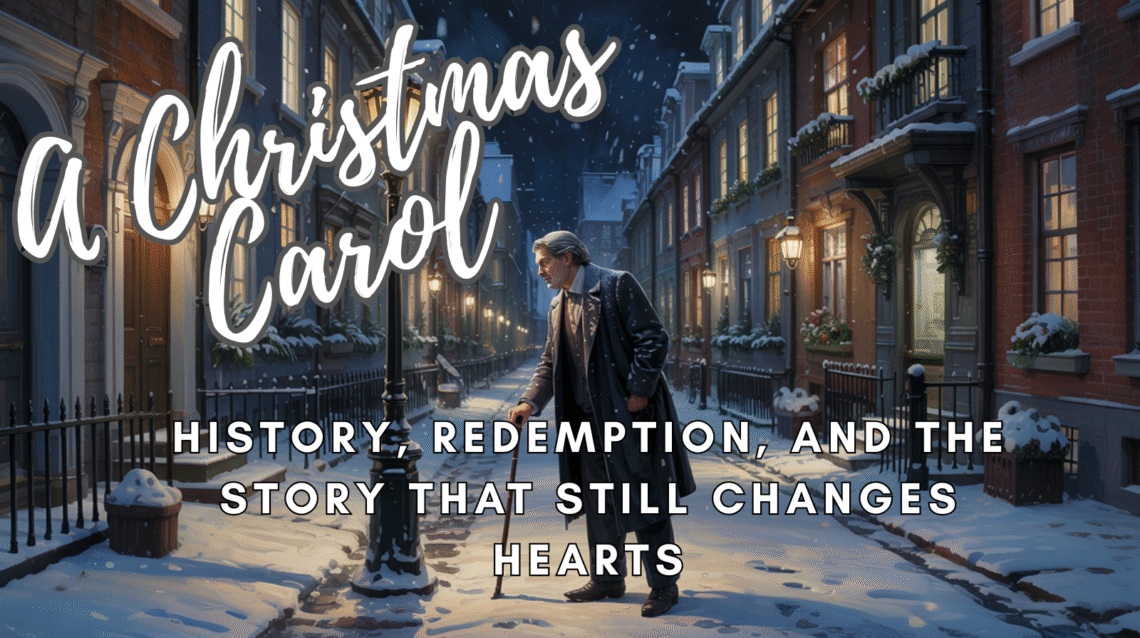
Few stories have shaped the moral imagination of Christmas like A Christmas Carol by Charles Dickens. First published in 1843, this short novella has endured for nearly two centuries, crossing generations, cultures, and even belief systems. At its heart, A Christmas Carol is not merely a holiday tale—it is a story of conversion, mercy, and the possibility of redemption, even for the hardest of hearts.
For Christians and seekers alike, the story echoes Gospel truths: that no one is beyond grace, that generosity heals both giver and receiver, and that transformation begins when we truly see others.
The Historical Context: Why Dickens Wrote A Christmas Carol
Charles Dickens wrote A Christmas Carol during a period of deep social crisis in Victorian England. The Industrial Revolution had created vast wealth for some—but crushing poverty for many.
Key historical influences:
- Child labor and debtor prisons were widespread
- Poorhouses offered little dignity
- Christmas, though celebrated, had lost much of its spiritual meaning
Dickens himself had experienced poverty as a child. His father was imprisoned for debt, and Dickens was forced to work in a factory at age twelve. These experiences shaped his lifelong concern for the poor and marginalized.
A Christmas Carol was written quickly—reportedly in six weeks—as Dickens sought to awaken the conscience of society.
Why the Story Became So Popular
A Christmas Carol succeeded where sermons often failed: it told the truth through story.
Reasons for its enduring popularity:
- It is short, accessible, and emotionally powerful
- Scrooge represents a universal human struggle: fear, greed, isolation
- The supernatural elements invite reflection rather than fear
- The ending offers hope without denying accountability
Most importantly, Dickens did not shame his audience—he invited them to change.
Ebenezer Scrooge: A Portrait of the Hardened Heart
Scrooge is not evil—he is wounded.
He is shaped by:
- Loss
- Fear of poverty
- Emotional isolation
- A belief that self-reliance is safer than love
This makes his transformation believable—and deeply human.
Through the visits of the three spirits, Scrooge is forced to confront:
- Who he was
- Who he has become
- Who he will be if nothing changes
This mirrors the Christian call to examination of conscience.
The Central Lesson: Redemption Is Possible
The core message of A Christmas Carol is simple and radical:
It is never too late to change.
Scrooge’s conversion is immediate and complete—not because he is threatened, but because he is awakened to love.
Christian readers often recognize familiar truths:
- Compassion over condemnation
- Generosity as an act of healing
- Time as a gift entrusted to us
Scrooge does not become perfect—but he becomes present, merciful, and joyful.
Why the Story Endures in Theater and Film
A Christmas Carol is one of the most adapted works in history, with hundreds of stage and film versions.
Why it works so well in theater:
- The ghosts lend themselves to dramatic storytelling
- The emotional arc is clear and satisfying
- It invites communal reflection—perfect for families and communities
Seeing A Christmas Carol performed live often leaves audiences reflective, softened, and inspired—especially during Advent and Christmas.
A Faith Reflection: Seeing with New Eyes
While Dickens was not writing a theological text, the story aligns closely with Christian teaching.
Themes that resonate with faith:
- Repentance leads to joy
- Love must be lived, not merely felt
- Wealth finds meaning only when shared
- Christmas is about incarnation—God entering human need
Scrooge’s awakening reminds us that conversion is not about the past—it is about how we live now.
Why This Story Still Matters Today
In a world still marked by:
- Economic inequality
- Emotional isolation
- Fear-driven living
A Christmas Carol remains prophetic.
It asks each reader:
- Who have I overlooked?
- Where have I closed my heart?
- What might change if I chose generosity today?
A Closing Reflection
Charles Dickens gave the world more than a Christmas story—he gave us a mirror. And every year, it asks us again whether we will remain unchanged… or step into a fuller, more compassionate life.
As Dickens wrote of Scrooge:
“He became as good a friend, as good a master, and as good a man, as the good old city knew.”