
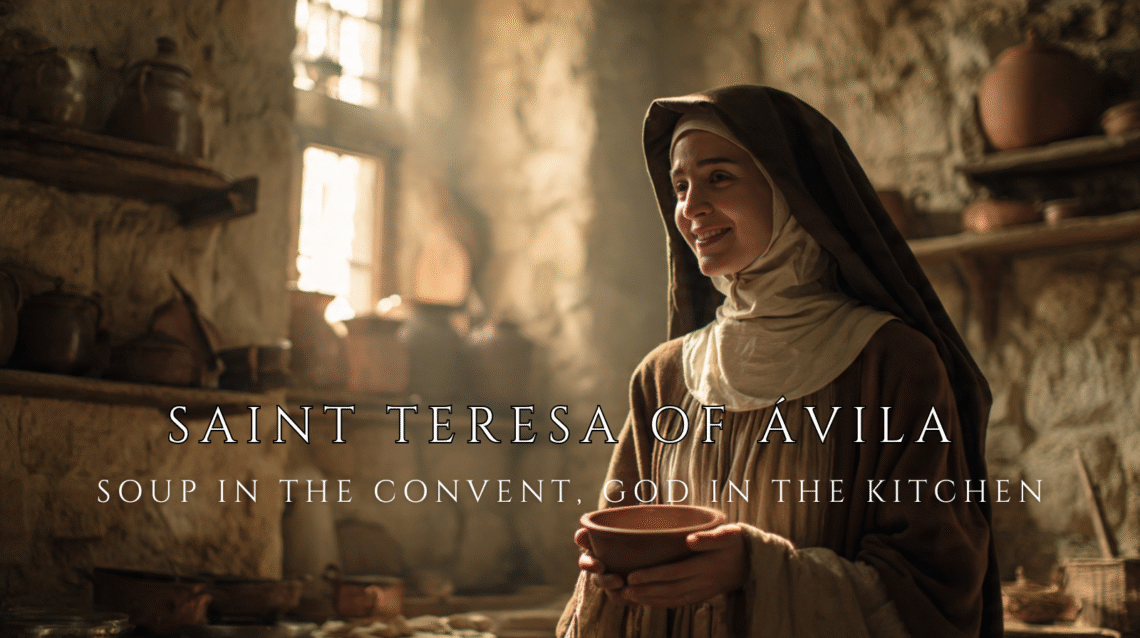
Holiness does not always arrive in thunder or silence. Sometimes, it comes through a bowl of soup.
In an age marked by extreme fasting and rigid asceticism, Saint Teresa of Ávila stood out not only for her mystical depth, but for her surprising practicality. She believed that God was not offended by nourishment, rest, or even humor — and that spiritual life, when stripped of humanity, could quietly become unhealthy.
Teresa’s wisdom reminds us that faith is not meant to break the body, exhaust the soul, or drain joy from daily life. Instead, holiness can grow in kitchens, convent refectories, and ordinary routines — where grace meets the everyday.
A Saint Who Knew the Cost of Extremes
Living in 16th-century Spain, Teresa entered religious life during a time when harsh fasting was often mistaken for holiness. Many believed that suffering itself was proof of devotion. Teresa, however, had lived long enough — and suffered enough illness — to know better.
She experienced chronic health problems for most of her life, including paralysis, severe weakness, and prolonged pain. Through that suffering, she learned discernment: penance that destroys the body does not honor God.
Rather than glorifying excess, Teresa urged moderation — not as indulgence, but as wisdom.
Soup in the Convent, God in the Kitchen
Saint Teresa is remembered for her simple convent meals, especially soups and broths. These were practical foods: nourishing, warming, and easy to prepare for a community of sisters who worked, prayed, and served daily.
She did not romanticize hunger. She understood that prayer required strength — and that strength required care.
One of the most beloved sayings attributed to her captures this beautifully:
“God walks among the pots and pans.”
For Teresa, the kitchen was not separate from prayer. Preparing food, eating together, laughing, and resting were all places where God could be found — if done with gratitude and balance.
Saint Teresa of Ávila’s Simple Convent Soup
(Historically Faithful Reconstruction)
Purpose of the Soup
This was not a “pleasure dish.”
It was nourishment — warm, sustaining, humble — meant to support prayer, work, and community life.
Likely Ingredients (16th-Century Carmelite Style)
These ingredients were common, affordable, and documented in Spanish convents of Teresa’s time:
- Water or light vegetable broth
- Garlic (1–2 cloves, crushed)
- Onion (small, chopped)
- Olive oil (a small amount)
- Dried chickpeas or lentils (soaked overnight)
- Stale bread (for thickening, optional)
- Salt (sparingly)
- Optional herbs (when available):
- Parsley
- Bay leaf
- Thyme
Meat was rare or absent, especially outside feast days.
Simple Preparation (Period-Accurate)
- Soak chickpeas or lentils overnight.
- Simmer legumes in water until soft.
- In a small pan, gently warm olive oil and sauté garlic and onion until fragrant (not browned).
- Add the mixture to the pot with legumes.
- Season lightly with salt and herbs.
- Add stale bread pieces if a thicker soup was needed.
- Simmer slowly, stirring occasionally, and serve warm.
No garnish. No indulgence. No excess.
Why This Soup Matters Spiritually
For Saint Teresa:
- Food was fuel for prayer, not a test of endurance
- Extreme fasting weakened discernment
- God was honored through balance, not punishment
This soup represented:
- Care for the body
- Obedience without cruelty
- Joy without excess
Humor as a Spiritual Discipline
What truly sets Teresa apart is her joy.
She laughed. She teased. She encouraged lightness of heart. She believed that gloom and rigidity were not signs of holiness, but often signs of pride or exhaustion.
She once warned her sisters against appearing overly severe, saying that a sour face could scandalize others more than a simple pleasure ever could.
In Teresa’s spirituality, joy protected the soul — just as much as discipline did.
Why This Still Matters Today
Saint Teresa of Ávila speaks directly to modern believers who feel burned out, spiritually pressured, or overwhelmed by unrealistic expectations of perfection.
Her message is gentle but firm:
- God does not demand self-destruction
- Nourishment is not a lack of faith
- Rest can be obedience
- Joy can be holy
Faith, for Teresa, was not about how much you denied yourself — but how faithfully you lived the life God gave you.
A Quiet Lesson from a Bowl of Soup
Saint Teresa’s legacy reminds us that holiness is not found only in extremes. Sometimes it grows slowly, faithfully, in the ordinary rhythms of life — where soup is shared, laughter is heard, and God is welcomed into every corner of the day.