The Story of Saint Rita of Cascia
Saint Rita of Cascia is one of the most beloved saints in the Catholic Church. Known as the patron saint of impossible causes, her life is a powerful story of patience, suffering, forgiveness, and unwavering faith in God.
Born around 1381 in Roccaporena, Italy, Rita desired from a young age to dedicate her life to God as a religious sister. However, following the customs of the time, her parents arranged a marriage for her.
Though she had hoped for a different path, Rita accepted the marriage with humility and trust in God.
A Difficult Marriage Transformed by Faith
Rita’s husband, Paolo Mancini, was known to have a violent temper and was involved in local conflicts. For many years Rita endured great suffering in her marriage.
Yet instead of responding with anger or bitterness, Rita chose patience, prayer, and kindness. Over time, her gentle faith slowly softened her husband’s heart.
According to tradition, her prayers eventually led to a change in him, and he began to live more peacefully.
However, tragedy struck when he was killed as part of a long-standing family feud.
Rita’s Remarkable Prayer for Her Sons
After her husband’s death, Rita faced another painful trial. Her two sons were tempted to seek revenge for their father’s murder.
Knowing that revenge would destroy their souls, Rita prayed a difficult prayer—asking God to prevent them from committing such a grave sin.
Not long afterward, both sons died of illness. Though heartbreaking, Rita believed God had protected them from falling into hatred and violence.
Entering Religious Life
After these tragedies, Rita sought to enter the Augustinian convent in Cascia.
At first she was refused admission because of the violent history between the families in her town. Eventually, after peace was restored between the feuding families, she was welcomed into the convent.
There she lived a life of prayer, humility, and devotion for about forty years.
The Wound of Christ
One of the most extraordinary events of Rita’s life occurred while she was meditating on the suffering of Christ.
During prayer before a crucifix, she received a mystical wound on her forehead, similar to one of the thorns from Christ’s crown. This wound remained with her for the rest of her life and was said to carry a strong odor.
Despite the suffering it caused, Rita accepted it as a sign of sharing in Christ’s passion.
The Miracle of the Rose
Near the end of her life, Rita was bedridden during winter.
She asked a relative to visit her childhood home and bring her a rose from the garden. Though it was the middle of winter, the relative reportedly found a single rose blooming.
This rose became a powerful symbol of Rita’s intercession and the hope that God can bring beauty and grace even in the most impossible situations.
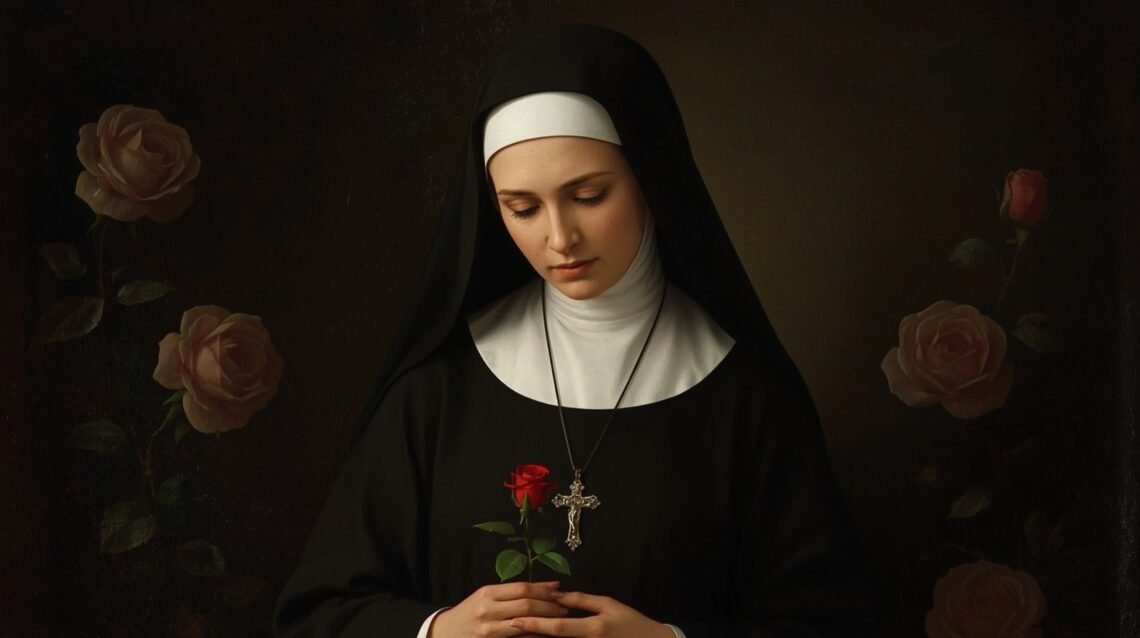
Because of this miracle, Saint Rita is often depicted holding a rose.
Patron Saint of Impossible Causes
Saint Rita died on May 22, 1457. Over the centuries, countless believers have prayed to her during times when situations seemed hopeless.
Her life reminds us that:
- patience can transform suffering
- forgiveness can overcome hatred
- faith can bring peace even in the darkest trials
For this reason she is known throughout the world as the patron saint of impossible causes.
Final Reflection
The story of Saint Rita is not simply about miracles.
It is about a woman who chose faith over bitterness, forgiveness over revenge, and love over despair.
And because of that faith, her story continues to bring hope to those facing the most difficult circumstances.