
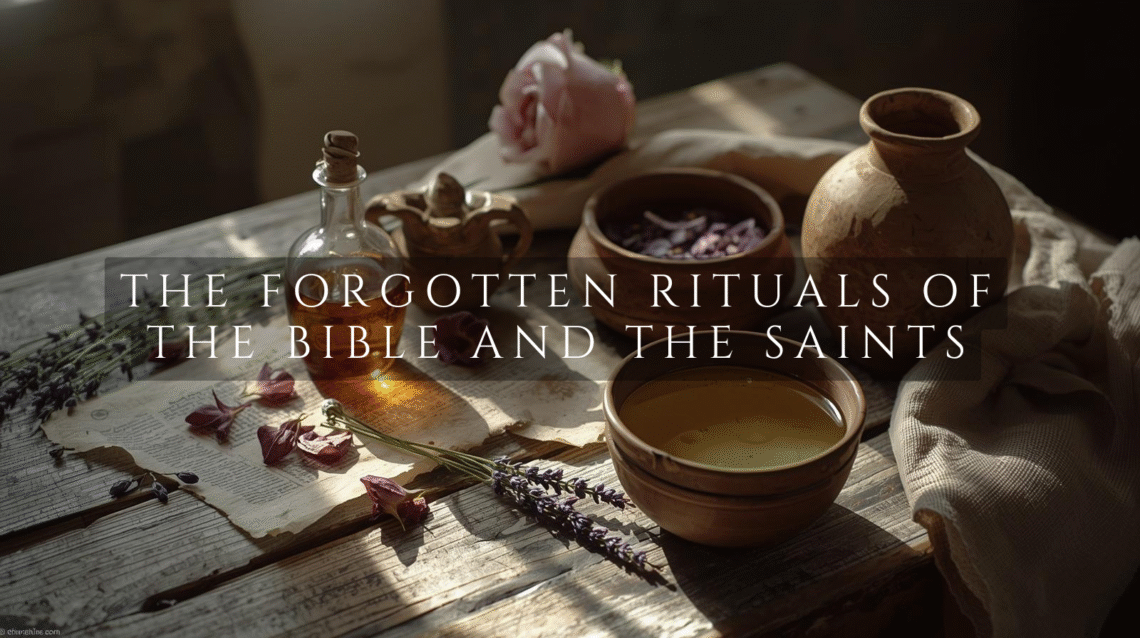
What Scripture and holy women quietly teach us about care, dignity, and feminine strength
There is a tenderness woven through Scripture that most people never notice — a thread of beauty, fragrance, anointing, and care that runs through the lives of biblical women and the saints. These rituals weren’t vanity. They were acts of dignity, preparation, healing, and hope.
Long before modern skincare routines and beauty influencers, women of faith were already practicing rituals that nourished the body and steadied the soul. Their ingredients were simple. Their gestures were intentional. Their beauty was rooted in meaning, not performance.
Come step into their world.
🌸 Esther’s 12‑Month Ritual of Healing & Preparation “Esther 2:12”
Before Esther ever stood before the king, she entered a year‑long ritual that Scripture describes with surprising detail:
- Six months with oil of myrrh
- Six months with perfumes and cosmetics
This wasn’t a royal spa day.
It was a purification rite, a healing season, a time of restoration after being taken from her home and thrust into uncertainty.
Myrrh was known to: - soften and heal the skin
- calm inflammation
- soothe emotional distress
- carry a warm, resinous fragrance that lingered
Esther’s beauty was not manufactured — it was cultivated through patience, healing, and time.
🌾 Ruth’s Ritual of Hope “Ruth 3:3”
When Naomi tells Ruth:
“Wash, put on perfume, and dress in your best clothes,”
she isn’t giving beauty advice.
She’s guiding Ruth into a moment of new beginnings.
Ruth had been widowed, uprooted, and grieving.
This simple ritual — bathing, anointing, dressing — was a way of saying:
“Lift your head.
Hope again.
Step into the next chapter with dignity.”
It is one of the most tender beauty moments in Scripture.
🌹 The Bride of the Song of Songs
The Song of Songs is a tapestry of ancient beauty imagery:
- henna for hair and hands
- myrrh sachets worn close to the heart
- frankincense and aloes
- cedarwood and cypress
These were the fragrances of love, femininity, and sacred intimacy.
They weren’t about appearance — they were about presence.
🌿 St. Hildegard of Bingen: The Herbal Mystic
The 12th‑century Benedictine abbess left behind a treasury of herbal wisdom.
For her, beauty was the harmony of body and soul.
She recommended:
- rosewater to calm the skin and spirit
- lavender for cleansing and emotional balance
- violet salves for cooling and soothing
Her remedies were gentle, earthy, and deeply feminine.
🍯 St. Brigid of Ireland: Beauty from the Land
Brigid’s world was full of fields, herbs, and simple remedies:
- oat infusions for soft skin
- honey for healing
- herbal rinses for hair (nettle, rosemary, meadowsweet)
Her beauty rituals were humble — the kind you could prepare in a clay bowl by the fire.
🌹 St. Elizabeth of Hungary: The Rose Saint
Elizabeth’s name is forever tied to roses, and so were her care rituals:
- rose petals steeped in water
- rose balms
- rose oil for anointing the poor
For her, beauty was charity — the fragrance of love poured out.
🌼 St. Thérèse of Lisieux: The Little Flower’s Secret
Thérèse didn’t leave behind recipes.
She left something deeper:
“A word, a smile, a small kindness — these are the flowers Jesus loves.”
Her beauty was interior, and it radiated outward.
She teaches us that gentleness is a cosmetic of the soul.
🌿 Ancient Beauty Recipes You Can Still Use Today
Esther’s Myrrh Oil Softener
- 1 oz olive or sweet almond oil
- 3–4 drops myrrh essential oil
Warm between hands and apply lightly.
Symbolic meaning: purification, healing, preparation.
Ruth’s Fragrant Oil of Hope
- olive oil
- 1 drop frankincense
- 1 drop sweet cinnamon
Symbolic meaning: new beginnings, dignity, courage.
St. Hildegard’s Rosewater Calm
- handful of rose petals
- steep in warm water
- strain and cool
Use as a gentle facial mist.
Symbolic meaning: peace, emotional clarity.
🌸 The importance of These Rituals
These ancient practices remind us that beauty is not performance.
It is care, presence, intention, and hope.
It is the quiet act of tending to the body God gave you.
It is the dignity of preparing yourself for the next chapter.
It is the fragrance of peace in a world that rushes past itself.
The women of Scripture and the saints teach us that beauty is not about perfection.
It is about honoring the soul by caring for the body.
And that is a ritual worth reclaiming.