There is a reason so many people call on Saint Anthony when something has gone missing.
For some, it is keys. For others, a wallet, a ring, a document, or something precious that cannot easily be replaced. But the devotion to Saint Anthony did not begin as a sweet little custom about misplaced objects. It grew from a much deeper story — one tied to prayer, repentance, and the recovery of something valuable that had been taken away.
Saint Anthony of Padua was a Franciscan friar, a brilliant preacher, and a man of deep prayer. Though many know him simply as the saint people ask for help when something is lost, the tradition behind that title is older and more meaningful than many realize. One long-remembered account says that a novice stole Anthony’s valuable psalter — a book used for prayer and study — and left the Franciscan community. Anthony prayed not only for the return of the book, but also for the return of the young man. According to the tradition, both were restored: the psalter came back, and the novice returned in repentance. That story helped shape Anthony’s enduring place in Catholic devotion as the patron saint of lost things.
That alone is worth pausing over.
Saint Anthony was not remembered only because something missing was found. He was remembered because what was restored was greater than an object. A wandering soul came back. A broken situation was mended. Something sacred that had been disturbed was set right again. That is why devotion to Saint Anthony still reaches people so deeply. We know what it is to lose things. But more than that, we know what it is to lose peace, direction, courage, innocence, discipline, trust, hope, or even our closeness with God.
Perhaps that is why so many people love him.
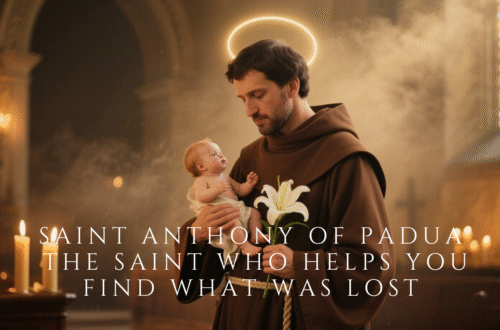
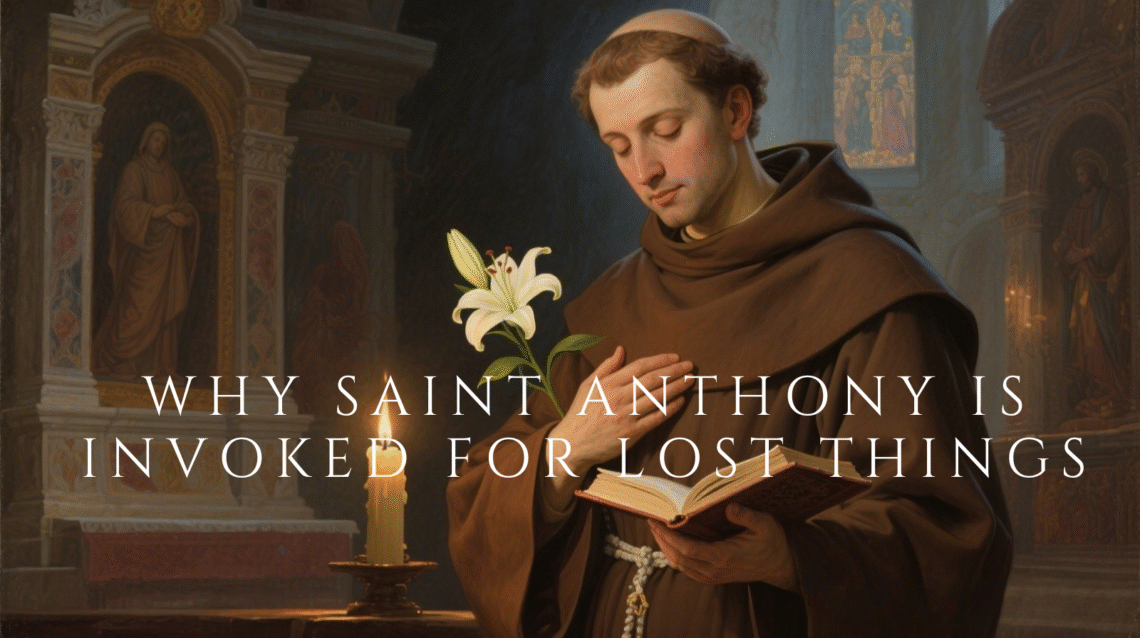
Saint Anthony was not shallow, and his holiness was not small. He was known as a gifted preacher and teacher, so much so that the Church later recognized him as a Doctor of the Church. He was canonized less than a year after his death, a sign of how powerfully his holiness had already touched the faithful. He is also often shown with a book of Scripture, because of his deep love for the Word of God, and in many images he is pictured with the Child Jesus, reflecting a later tradition that became one of the most beloved parts of his iconography.
But even with all of that greatness, ordinary people did not forget the human side of him. They remembered that he prayed in real need. They remembered that God answered. And they kept turning to him.
There is something tender in that.
People often smile and say, “Saint Anthony, please help me find what is lost.” Yet under those simple words, there is often much more. Sometimes what is lost is not visible. Sometimes what is lost is a marriage that has gone cold, a prayer life that has faded, a son or daughter far from God, a sense of identity shattered by grief, or a heart that no longer knows how to hope. Sometimes people are not looking for a missing possession at all. They are asking heaven to help them recover what life, sin, pain, or confusion has stolen.
And perhaps this is where Saint Anthony still speaks most powerfully.
He reminds us that God cares not only about grand spiritual matters, but also about the details that weigh on the human heart. He cares about what has been taken, what has been broken, and what needs to be restored. The same God who sees the wound of the soul also sees the thing that was lost, the burden carried in silence, and the anxious prayer whispered in frustration. Through Saint Anthony’s intercession, many Catholics have learned to bring both the small and the great to God with childlike trust. Franciscan devotion to Saint Anthony continues to reflect that wide range of needs, from lost items to healing, guidance, and peace of mind.
So perhaps the better question is not only, “What have I lost?”
Perhaps it is also, “What do I need God to restore?”
That question reaches deeper.
Maybe you need God to restore your joy.
Maybe you need Him to restore your courage.
Maybe you need Him to restore your family, your prayer, your focus, your sleep, your trust, or your desire to begin again.
Saint Anthony’s story reminds us that what is lost is not always gone forever.
Sometimes it is waiting to be returned through prayer.
Sometimes God uses the ache of loss to bring us back to what matters most.
And sometimes, through the intercession of a humble saint, what is restored becomes even more precious than before.
Short closing prayer:
Saint Anthony, faithful servant of God, you who helped recover what was lost, pray for us. Ask the Lord to restore what has gone missing in our lives, whether material or spiritual, and lead our hearts back to what matters most. Through Christ our Lord. Amen.