
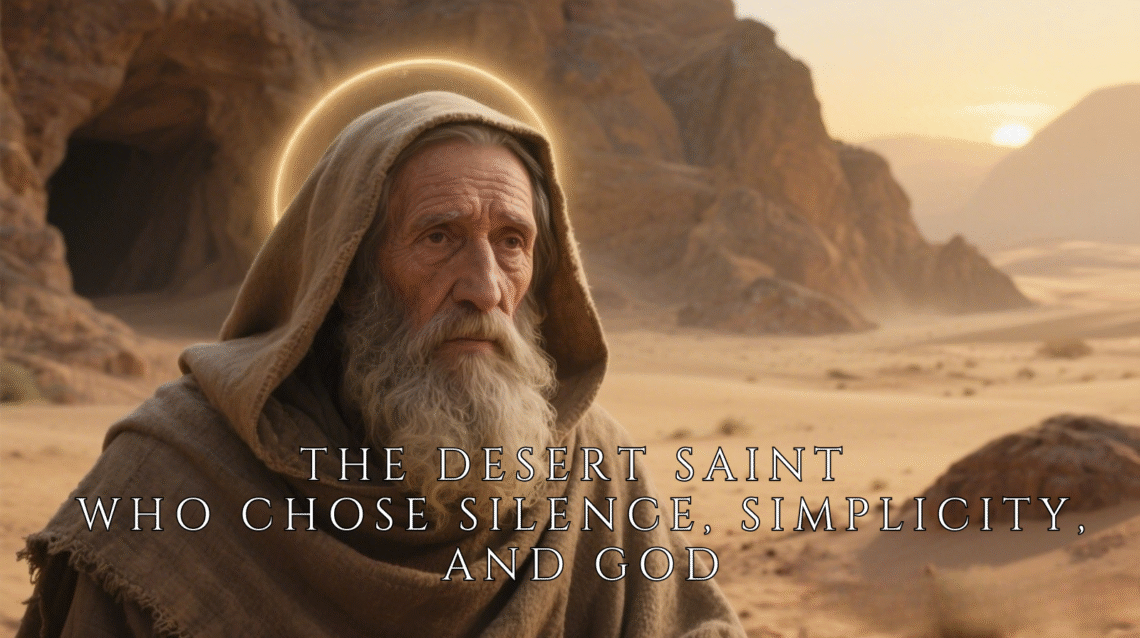
In a world shaped by noise, speed, and endless distraction, the life of Saint Anthony of Egypt feels almost impossible to imagine. Born into wealth in the third century, Anthony could have lived comfortably, surrounded by security and status. Instead, he made a decision so radical that it would quietly reshape Christian spirituality for centuries to come. He gave everything away — his inheritance, his property, his social standing — and walked into the desert seeking only one thing: God. Long before monasteries existed, long before asceticism had a name, Saint Anthony chose silence over applause, simplicity over comfort, and prayer over control. Today, he is remembered as the Father of Monasticism, but behind the title stands a deeply human man who wrestled with temptation, loneliness, fear, and perseverance. Understanding who Saint Anthony truly was — how he lived, what he ate, how he prayed, and why people still turn to him — reveals a timeless invitation to rediscover peace in a restless age.
Who Was Saint Anthony of Egypt?
Saint Anthony of Egypt, also known as Saint Anthony the Great, was born around the year 251 AD into a wealthy Christian family. After the death of his parents, Anthony entered a church and heard the Gospel proclaimed:
“If you wish to be perfect, go, sell what you have and give to the poor.” (Matthew 19:21)
Anthony did not debate the meaning.
He obeyed it.
He distributed his wealth to the poor, entrusted his sister to a community of consecrated women, and withdrew first to the outskirts of his village — and eventually deep into the Egyptian desert.
He did not flee society because he despised it.
He withdrew because he wanted nothing between his soul and God.
The Desert Was Not an Escape — It Was a Battleground
Many imagine Saint Anthony’s desert life as peaceful and serene. In truth, it was anything but easy.
Ancient writings, especially The Life of Anthony by Saint Athanasius, describe intense inner battles:
- temptation
- intrusive thoughts
- despair
- fear
- spiritual dryness
Anthony spoke openly about these struggles, believing that holiness was not the absence of temptation, but the refusal to surrender to it.
The desert stripped away distractions.
What remained was the truth of the human heart.
This honesty is one of the reasons Saint Anthony still resonates with people today — especially those battling anxiety, addiction, compulsive habits, or spiritual restlessness.
What Saint Anthony Ate: Food as Survival, Not Pleasure
Saint Anthony’s diet was intentionally simple.
He believed excess dulled the soul and weakened discernment. His daily sustenance usually consisted of:
- Dry bread
- Water
- Occasionally dates or basic vegetables
He often ate once a day, sometimes less.
Food was never an experience to savor.
It was fuel — nothing more.
This restraint was not rooted in self-punishment, but in clarity. Anthony believed that when the body is quiet, the soul becomes attentive.
Herbs, Oils, and Natural Living in the Desert
Living in the Egyptian wilderness required practical knowledge of nature.
Saint Anthony relied on:
- bitter desert herbs for digestion
- natural oils for wounds and skin care
- plants used for survival, not comfort
Healing was never attributed to remedies themselves. Anthony consistently taught that God alone heals, and any natural aid was secondary to prayer, humility, and trust.
This grounded approach makes him relatable to modern readers searching for balance between faith and daily life.
Prayer Instead of Music: Scripture as His Anchor
Saint Anthony did not listen to music for pleasure.
Instead, he memorized Scripture and recited it aloud throughout the day. Psalms were repeated rhythmically, sometimes whispered, sometimes spoken firmly.
This constant prayer served several purposes:
- grounding the mind
- resisting temptation
- replacing anxious thoughts
- sustaining endurance in solitude
For Anthony, the voice became the instrument, and Scripture the melody.
In modern language, his practice resembles spiritual mindfulness — but anchored firmly in God.
Why People Still Turn to Saint Anthony of Egypt Today
People seek Saint Anthony’s intercession for deeply interior struggles, including:
- inner turmoil and anxiety
- temptation and compulsive habits
- perseverance in prayer
- clarity of vocation
- detachment from unhealthy attachments
- simplicity of life
He is a saint for those who feel overwhelmed by noise, clutter, and constant pressure — both externally and within.
A Saint for a Restless Age
Saint Anthony of Egypt did not preach publicly.
He did not seek influence.
He did not attempt to reform society.
And yet, people came.
They came because his life radiated clarity.
They came because his silence spoke truth.
They came because peace is recognizable — even when unspoken.
In a culture that rewards excess, Saint Anthony reminds us that freedom often begins with letting go.
Why His Life Still Matters
Saint Anthony’s legacy is not about copying his lifestyle literally. Most are not called to the desert.
But all are invited to ask:
- What distracts my peace?
- What attachments keep me from prayer?
- What noise prevents me from hearing God?
His life offers not a command, but an invitation — to choose simplicity, attentiveness, and trust in a world that constantly demands more.
Final Thought
Saint Anthony of Egypt did not run away from the world.
He ran toward God — and in doing so, found a wisdom the world still seeks.


