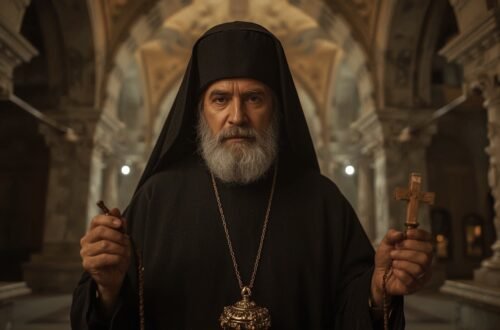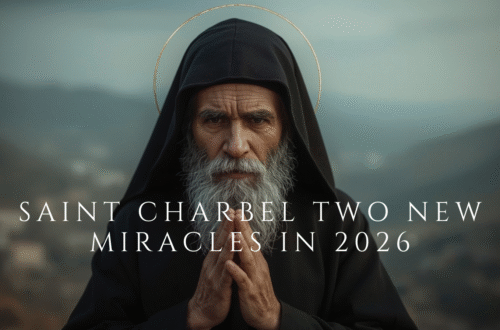
Saint Charbel Makhlouf is one of the most remarkable miracle saints of the modern Catholic world. Though he lived a hidden life as a hermit monk in the mountains of Lebanon during the nineteenth century, the events surrounding his death and relics have drawn pilgrims from across the globe for more than a century. His story combines deep holiness, mysterious phenomena, and thousands of testimonies from believers who say they experienced healing through his intercession.
Saint Charbel was born in 1828 in the mountain village of Bekaa Kafra in northern Lebanon, one of the highest permanently inhabited villages in the Middle East. The region was deeply rooted in Christian tradition, and from childhood Charbel showed a strong attraction to prayer and solitude. Those who knew him later recalled that while other boys worked in the fields or played with friends, Charbel often withdrew to quiet places to pray. He sometimes spent hours alone in a nearby grotto speaking to God.
At the age of twenty-three he left his family and entered the Monastery of Saint Maron in Annaya, joining the Maronite monastic community. There he embraced a disciplined life of prayer, fasting, silence, and manual labor. After several years he was ordained a priest and continued living the monastic life with great devotion.
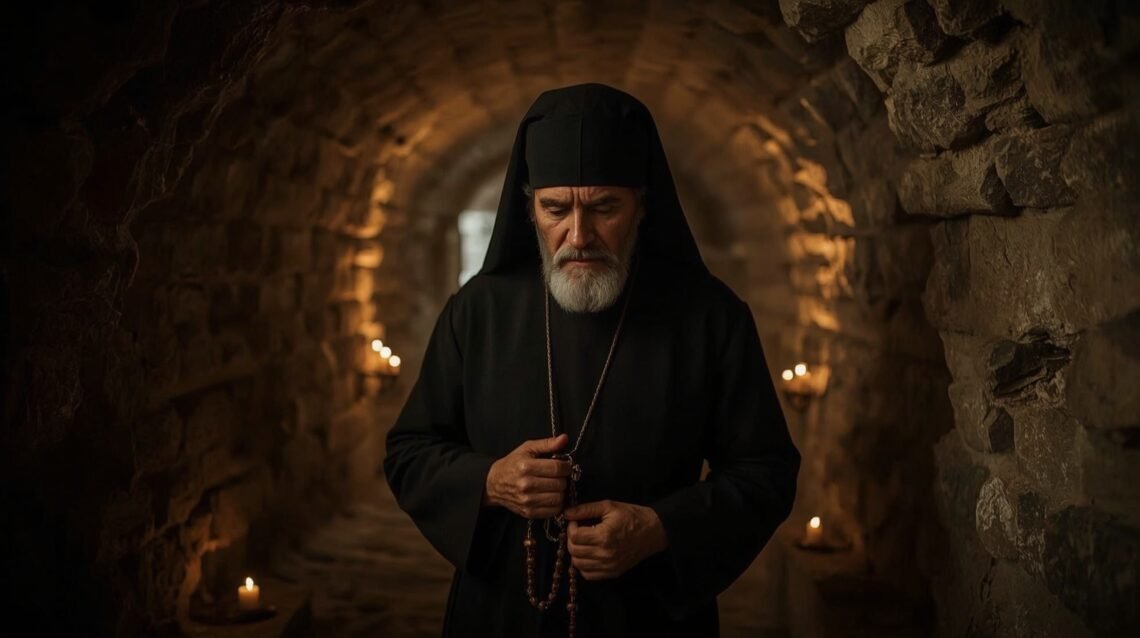
Yet even within the monastery Charbel desired a deeper solitude. Eventually he was granted permission to live as a hermit in a small stone hermitage located near the monastery. For more than twenty years he lived there in extraordinary simplicity. His days were spent almost entirely in prayer, meditation, and the celebration of the Divine Liturgy. Those who encountered him described a man whose entire life revolved around God. Though he spoke very little, fellow monks sometimes remarked that during Mass his face appeared filled with a peaceful light.
On December 16, 1898, while celebrating the Divine Liturgy, Saint Charbel suddenly suffered a stroke at the altar. He lingered for several days and died on December 24, 1898. Following the humble custom for monks of the community, he was buried without a coffin in the monastery cemetery.
What happened next surprised everyone.
Soon after his burial, villagers living near the monastery began reporting mysterious lights shining above the cemetery at night. At first the monks dismissed the reports, but the lights continued to appear repeatedly. Eventually Church authorities ordered the tomb opened to investigate.
When the grave was examined, those present were astonished. Saint Charbel’s body had not decomposed in the way normally expected. Even more mysterious, witnesses reported a liquid substance resembling a mixture of blood and water flowing from the body. This phenomenon continued for years and was carefully examined by doctors and investigators. Despite repeated examinations, no clear explanation was found for the condition of the body or the unusual fluid.
Because of these extraordinary events, Saint Charbel’s remains became one of the most remarkable relics associated with a modern Catholic saint. Pilgrims began traveling to the monastery in Annaya to pray at his tomb. Over time the monastery became one of the most important pilgrimage sites in the Middle East.
In 1950 the tomb was reopened again after renewed reports of light and the mysterious fluid associated with the body. News of these events spread widely, and thousands of pilgrims began traveling to the monastery. From that point forward devotion to Saint Charbel expanded far beyond Lebanon and eventually reached the wider Catholic world.
As pilgrims visited the shrine, testimonies of healings began to multiply. People suffering from illness, paralysis, and other serious conditions came to pray at the tomb asking for Saint Charbel’s intercession. Many later reported unexpected recoveries or improvements in their health.
One of the most widely known miracles associated with Saint Charbel occurred in 1993 and involved a Lebanese woman named Nohad El Shami. She suffered from severe medical conditions that left her partially paralyzed. After praying for Saint Charbel’s intercession, she reported experiencing a dream in which two monks performed a mysterious operation on her neck. When she awoke, she discovered she could move again. Doctors later examined her and noted surgical-like wounds on her neck that could not easily be explained. The event drew renewed global attention to Saint Charbel and strengthened devotion to him around the world.
Another devotion connected to Saint Charbel developed through the monastery in Annaya. Pilgrims visiting the shrine often receive blessed oil associated with prayers to the saint. Many believers anoint themselves or loved ones while praying for healing, placing their trust in God while asking Saint Charbel to intercede for them. Numerous testimonies describe people experiencing comfort, relief from illness, or renewed faith after praying with this oil.
Reports of healings connected to Saint Charbel continue into the present day. In January 2026 Catholic media reported two newly claimed healings attributed to his intercession, one involving a woman in the United States and another in Lebanon. These cases were described as recoveries from conditions believed to be medically hopeless. As with all such claims, the Catholic Church carefully investigates before officially recognizing miracles, but the reports illustrate how devotion to Saint Charbel remains active in many parts of the world.
Despite the extraordinary events associated with his tomb and relics, the life of Saint Charbel itself was marked by remarkable simplicity. He did not seek recognition or fame, and he never preached to large crowds. Instead he spent most of his life in silence, prayer, and devotion to God within a small hermitage in the Lebanese mountains.
Perhaps that is why his story continues to inspire so many believers today. The miracles associated with Saint Charbel seem to emerge from a life that was almost entirely hidden from the world.
Today thousands of pilgrims travel every year to the Monastery of Saint Maron in Annaya, where his relics are kept. Many arrive seeking healing, peace, or spiritual renewal. Others simply come to pray in the quiet place where a humble monk once dedicated his life to God.
Saint Charbel’s story reminds believers that holiness often grows in silence, and that sometimes the prayers of a hidden life can echo across generations.
Saint Charbel, faithful servant of God who lived a life of prayer and devotion, we ask for your intercession. Pray for us in times of illness, difficulty, and uncertainty. Ask the Lord to grant healing where there is suffering, peace where there is anxiety, and hope where hearts feel burdened. Help us trust in God’s mercy and remain faithful in prayer. Saint Charbel, pray for us. Through Christ our Lord. Amen.