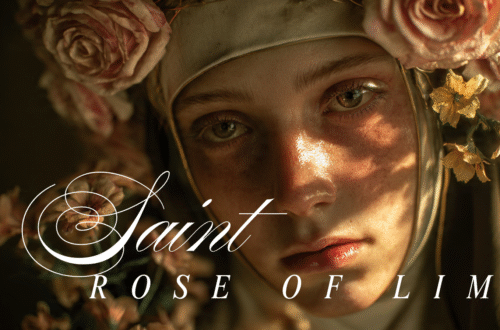
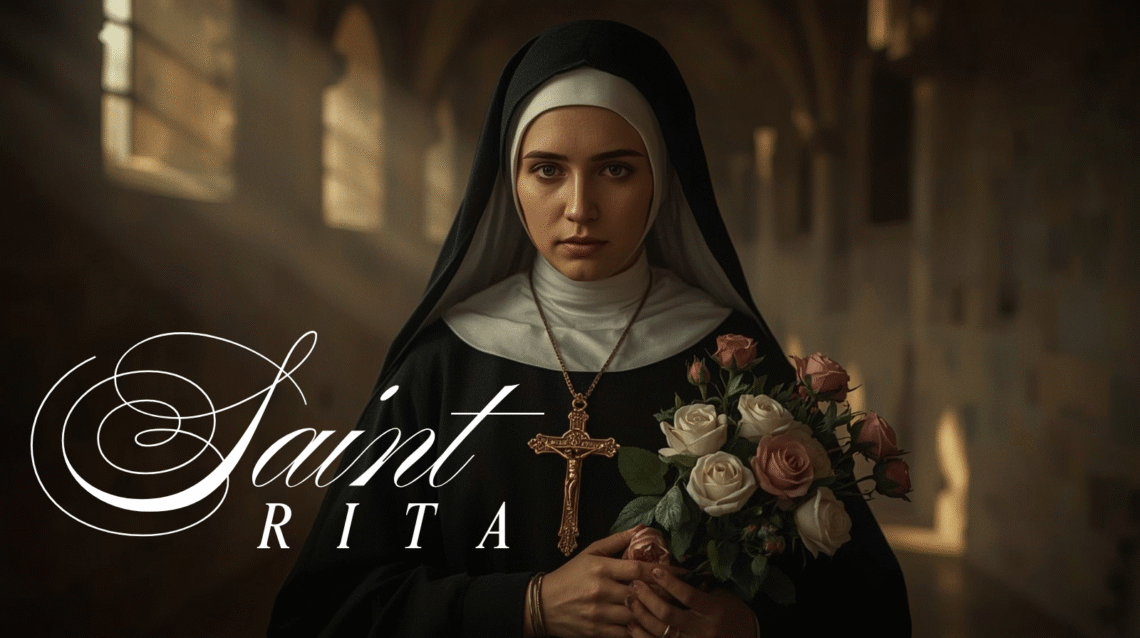
Saint Rita of Cascia is known around the world as the saint of impossible causes. Many people recognize her because of the wound on her forehead, the rose, or the difficult trials she endured. But one of the most astonishing parts of her life is not the thorn or even the rose. It is the prayer she made as a mother—a prayer so painful, so surrendered, and so full of trust in God that it still leaves people speechless today.
Rita was born in Roccaporena, near Cascia, in Italy, in 1381. Though she desired religious life from a young age, she was given in marriage and became a wife and mother. Her husband, Paolo, had a violent temper, and their marriage was deeply difficult. Rita endured years of hardship with patience, prayer, and faith, and tradition holds that over time her witness helped soften his heart.
Then tragedy struck. Paolo was murdered in the middle of a family feud. Rita’s suffering did not end there. Their two sons were consumed with anger and wanted revenge for their father’s death. Rita knew what that would mean—not only more violence, but the danger of mortal sin and the loss of their souls. She pleaded with them to forgive. When she saw their hearts still burning for vengeance, she turned to God with a prayer that only a soul fully surrendered could pray.
She asked the Lord to prevent her sons from committing so grave a sin, even if that meant taking them from this world first. That prayer is one of the most shocking and heartbreaking moments in the lives of the saints. Yet it reveals something extraordinary about Rita: she loved her sons so deeply that she begged God to save their souls at any cost. According to the traditional accounts, both sons later died after being reconciled to God.
This is one reason Saint Rita became associated with the impossible. She did not trust God only when the answer was pleasant. She trusted Him when the answer wounded her. She trusted Him when obedience was costly. She trusted Him when surrender looked like loss. In a world that often calls revenge strength, Rita chose mercy. In a world that confuses love with possession, Rita showed that true love wants salvation before all else.
After the deaths of her husband and sons, Rita sought entrance into the Augustinian convent at Cascia. Tradition says she was first refused, but was later admitted after extraordinary circumstances convinced the sisters that God Himself was making a way for her. She lived there for decades in prayer, penance, and hidden holiness. Later in life, while meditating on Christ’s Passion, she received a wound on her forehead like a thorn from the Crown of Thorns, a sign for which she is still remembered.
Near the end of her life came another beloved sign. While she was ill, she asked for a rose from her family garden, even though it was the dead of winter. When a relative visited the garden, a single fresh rose was found blooming in the snow. That is why Saint Rita is often shown holding roses, and why roses are blessed in her honor on her feast day, May 22. Another tradition from her infancy says white bees were seen around her cradle, gently entering and leaving her mouth without harming her. These signs helped shape the imagery by which many Catholics recognize her today.
But perhaps the greatest miracle of Saint Rita was not the rose, the bees, or even the thorn. It was the miracle of forgiveness. It was the grace to choose mercy after betrayal, peace after violence, and surrender when everything in the human heart would want to fight back. That is why people still run to her in desperate marriages, impossible family situations, broken hearts, abuse, sickness, and cases that seem beyond hope. Her life tells us that even when everything appears ruined, God is still able to bring grace out of what looks impossible.
Saint Rita’s hidden story matters now more than ever. Many people are carrying family pain, betrayal, grief, bitterness, or long years of unanswered prayer. Her witness reminds us that holiness is not found only in visible miracles. Sometimes the deepest miracle is the soul that chooses forgiveness when revenge feels easier, trust when sorrow feels unbearable, and God when life makes no sense.
If you are praying through an impossible situation today, Saint Rita is one of heaven’s most powerful companions. She knew what it was to suffer, to wait, to lose, and still to trust. And that may be the most amazing and least understood part of her story: she did not become the saint of the impossible because life was easy. She became the saint of the impossible because, when everything was broken, she still believed God could redeem it.
Prayer to Saint Rita for Impossible Situations
Saint Rita,
faithful servant of God and friend of the wounded heart,
you who endured suffering, betrayal, loss,
and still remained steadfast in faith,
pray for me now.
You know what it is to carry sorrow
and to trust God in what seemed impossible.
Intercede for me before the Lord
in this need that weighs so heavily upon my heart.
Obtain for me the grace to forgive,
the strength to endure,
and the faith to believe
that God is still working even now.
Saint Rita, advocate of the impossible,
pray that what is broken may be healed,
what is delayed may be surrendered,
and what seems hopeless may be touched
by the mercy and power of God.
Through Christ our Lord, Amen.