There are moments in life when nothing is technically “wrong,” yet everything feels misaligned.
You’re functioning.
You’re moving forward.
You’re doing what you believe is expected of you.
And still — something feels off.
That’s where Saul was.
Saul wasn’t lost in the way we usually think of being lost. He wasn’t immoral. He wasn’t careless. He wasn’t drifting. In fact, Saul was disciplined, educated, respected, and deeply religious. He believed in God. He knew Scripture. He was convinced he was doing the right thing.
And that’s what makes his story so unsettling — because Saul teaches us that you can be sincere, committed, and completely wrong about where God is actually moving.
Saul believed that protecting God required force. He believed truth had to be defended aggressively. He believed obedience meant control. And because he believed this with his whole heart, he never questioned himself.
Until God stopped him.
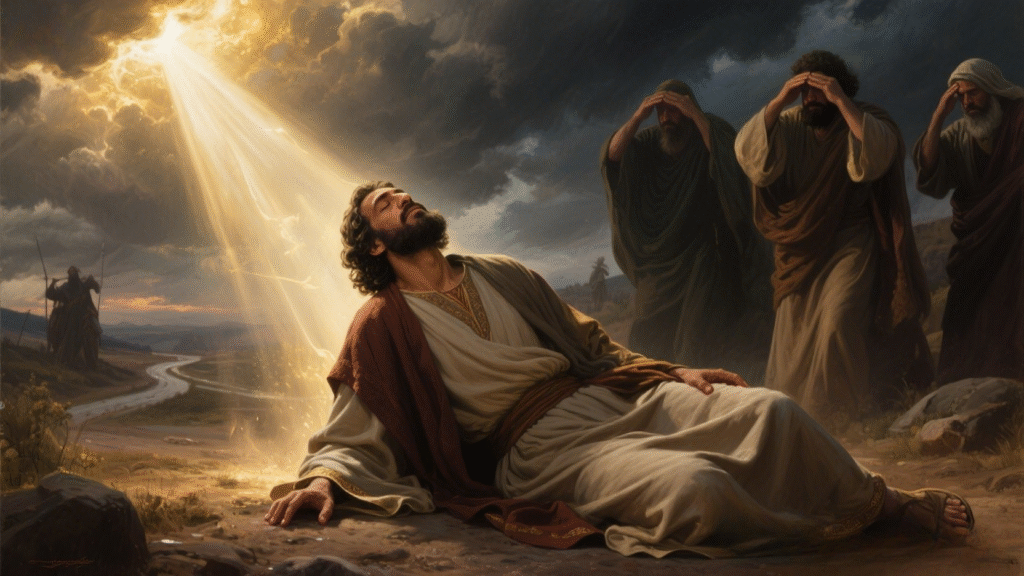
The Road Wasn’t a Detour — It Was an Intervention
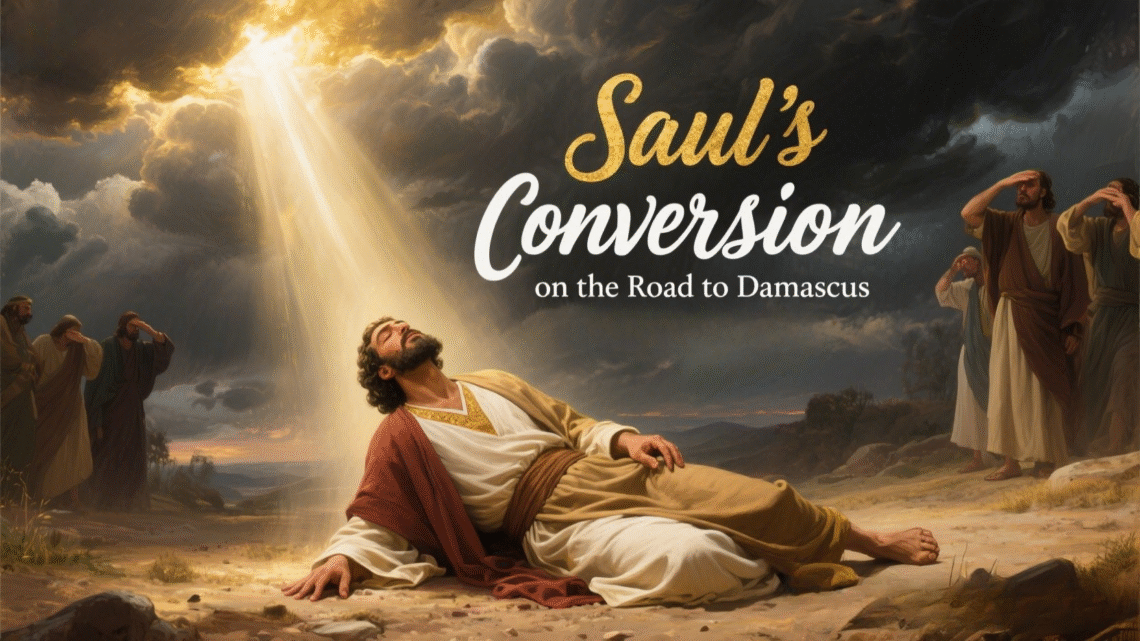
Scripture tells us Saul was on the road to Damascus with a clear plan. He knew where he was going. He knew what he was going to do when he got there. There was no confusion in him — only certainty.
And then everything breaks open.
A light.
A fall.
A voice.
Not anger.
Not condemnation.
A question.
“Saul, Saul… why are you persecuting Me?”
This is important: Jesus does not accuse Saul of misunderstanding theology. He doesn’t debate him. He doesn’t explain doctrine.
He asks why.
Because God is not interested in winning arguments — He is interested in saving souls.
Saul falls to the ground, not because he is weak, but because the life he is standing on can no longer hold him.
And here is where this becomes personal for us:
Sometimes God does not correct us gently because gentle correction would not reach us. Sometimes He has to interrupt us — not to punish us, but to protect us from becoming someone we were never meant to be.
Why God Took Saul’s Sight
Saul becomes blind.
And this is not symbolic fluff — it is deeply practical.
Saul had been seeing everything through certainty, through ideology, through control. God removes his sight because Saul needs to feel what it is like to be vulnerable, dependent, led instead of leading.
For three days, Saul sits in darkness.
No answers.
No instructions.
No reassurance.
Just silence.
And this is where many of us panic.
Because silence feels like abandonment — but in Scripture, silence is often where transformation begins.
God does not rush Saul into his new identity. He lets the old one dissolve first.
Ananias: Grace Comes Through the Last Person You Expect
God sends Ananias — someone Saul would have arrested — to restore his sight.
Think about that.
God does not send a powerful leader.
He does not send a public figure.
He sends an ordinary believer who is afraid.
And Ananias is honest with God about that fear.
This matters, because it shows us something crucial: God works through imperfect obedience, not fearless people.
When Ananias lays hands on Saul and his sight returns, what is restored is not just vision — it is humility.
Saul is baptized not as a conqueror, but as someone who has been undone and rebuilt.
Why Saul Becomes Paul (And Why That Matters to You)
Paul never forgets who he was.
He does not erase Saul.
He does not pretend the past didn’t happen.
He carries it — transformed.
This is why Paul writes the way he does later in life. This is why his words feel so raw, so honest, so grounded in weakness.
When Paul says:
“When I am weak, then I am strong,”
he is not offering a slogan.
He is describing a lived reality.
Paul learned that strength without humility becomes violence.
Certainty without love becomes destruction.
Faith without surrender becomes control.
And this is where Saul’s story meets our moment.
How This Applies Right Now — Not in Theory, but in Life
Many people today are not running from God — they are exhausted by trying to do life “correctly.”
They are:
- Doing what they were taught
- Carrying responsibilities
- Holding everything together
- Trying to be strong
And yet something inside feels blind.
Saul’s conversion tells us this: God is not offended by your questions, your exhaustion, or your collapse.
Sometimes the breakdown you are experiencing is not failure — it is mercy.
God may be stopping you because the path you’re on is shaping you into someone you don’t want to become.
A Reflection to Sit With
Where might you be moving forward with certainty, but without peace?
What if the thing that feels like interruption is actually protection?
What if God is not disappointed in you — but inviting you to see differently?
A Prayer (Not Polished — Honest)
Lord,
If there is anything in me that is moving without love, stop it.
If there is anything I am clinging to because it feels safe, loosen my grip.
If I cannot see clearly, give me the courage to sit in the dark until You restore my sight.
I don’t want to be right — I want to be aligned.
I don’t want control — I want truth.
I don’t want strength that hardens me — I want strength that heals.
Interrupt me if You must.
I trust You enough to let You.
Amen.