
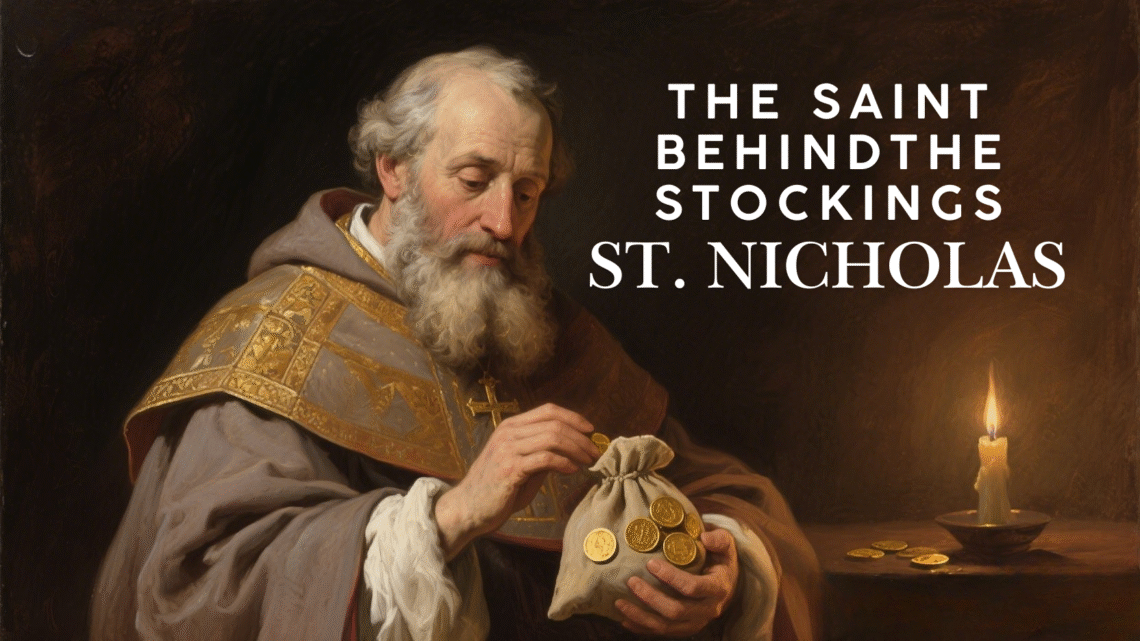
St. Nicholas of Myra
When most people hear the name St. Nicholas, they think of gifts, Christmas, and a red-suited legend. But the truth is far more beautiful — and far more serious.
St. Nicholas was a real man, a 4th-century bishop, and one of the Church’s most quietly radical saints. His story is not about excess or fantasy. It is about protection, dignity, and restoring what poverty threatened to steal.
📜 Who St. Nicholas Really Was
St. Nicholas was born around 270 AD in Patara (modern-day Turkey). He later became Bishop of Myra, known for his deep faith, strong defense of Christian truth, and extraordinary compassion for the poor.
He lived during a time when:
- poverty could destroy a family’s future
- women without dowries were vulnerable to exploitation
- charity, if public, often humiliated the recipient
Nicholas believed true charity should preserve dignity — not announce itself.
🧦 The Story of the Stockings and the Coins (Yes, It’s Real)
One of the oldest and most enduring traditions about St. Nicholas tells of a desperate father with three daughters.
The father could not afford dowries.
Without them, his daughters could not marry and were at risk of being sold or harmed.
St. Nicholas learned of their situation and resolved to help — without being seen.
Under cover of night, he secretly tossed small bags of gold coins into the family’s home.
According to early tradition:
- the coins landed in stockings or socks hung out to dry
- or fell near the girls’ belongings
This act happened three times — once for each daughter.
What matters most:
St. Nicholas did not give gifts.
He restored futures.
He protected these women, preserved their dignity, and quietly made marriage — and safety — possible.
💍 Why St. Nicholas Is Linked to Marriage & Provision
Because of this act, St. Nicholas became known not only as a giver, but as:
- a protector of women
- a helper in times of material desperation
- an intercessor for right provision, especially for family life
This is not romantic matchmaking.
It is practical mercy.
Unlike St. Valentine, associated with romantic love, St. Nicholas is associated with:
- removing obstacles
- restoring stability
- allowing life to move forward again
That is why stockings, shoes, and nighttime gifts became symbols — not of fantasy, but of quiet rescue.
🎄 From Saint to Santa — What Got Lost
Over centuries, European Christian cultures preserved this story through:
- stockings hung in homes
- shoes placed by doors
- small anonymous gifts
Eventually, the sacred story softened into folklore.
The saint faded. The symbol remained.
But behind every stocking is this truth:
Someone cared enough to intervene quietly — and everything changed.
🕯️ Why This Story Still Matters
St. Nicholas reminds us that:
- God often provides without spectacle
- help can arrive before despair becomes disaster
- holiness can be anonymous and joyful
That’s why this story makes people smile.
It’s hope — without noise.
And that’s not silly at all.





One comment on “St. Nicholas: The Saint Behind the Stockings, the Coins, and the Quiet Restoration of Hope”