If you think modern Church drama is intense, wait until you hear about the moment in history when a pope literally put a corpse on trial. Yes — a real trial, with a judge, accusations, and a defendant who had been dead for months.
It sounds like satire. It sounds like a Netflix dark comedy.
But it’s one of the most documented events of the 9th century.
Welcome to the Cadaver Synod — the moment the Church’s political chaos reached a level so surreal that even medieval people said, “Okay… this is too much.”
A Church Torn by Politics and Power
The late 800s were a turbulent time for the papacy. Popes came and went quickly — some lasted months, some weeks. Political families fought for control of Rome, and the papacy was caught in the middle of their power struggles.
Enter Pope Formosus, a man who had enemies long before he ever became pope. He was respected by many, but deeply resented by others. After his death, his political opponents weren’t satisfied. They wanted to destroy his reputation completely.
And that’s where Pope Stephen VI comes in.
The Trial No One Asked For
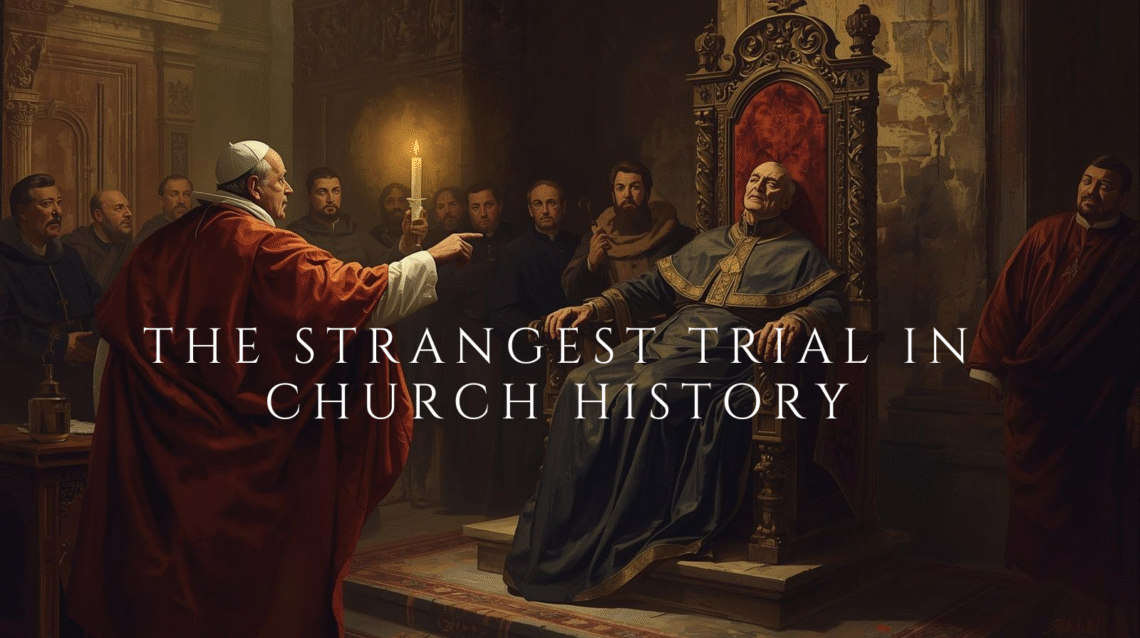
In January 897, Pope Stephen VI ordered Formosus’ body to be dug up, dressed in papal vestments, and seated on a throne in the Lateran Basilica.
Yes. Seated. On a throne.
A corpse.
Stephen then convened a formal trial — the Cadaver Synod — accusing Formosus of violating Church law and overstepping his authority.
A deacon was appointed to “speak” for the deceased pope.
The living pope shouted accusations at the dead one.
Witnesses were called.
Judges were present.
It was as bizarre as it sounds.
Why Did This Happen?
The short answer: power.
Stephen VI wanted to erase Formosus’ decisions, especially the bishops he had appointed. By condemning Formosus posthumously, Stephen could invalidate everything he had done — and strengthen his own political allies.
It was less about theology and more about control.
The Aftermath: Chaos, Backlash, and a Lesson in Humility
The people of Rome were horrified. Even in an era of political brutality, this felt like a violation of basic human dignity.
The backlash was so strong that Stephen VI was eventually deposed and died in prison.
Later popes reversed the Cadaver Synod, restored Formosus’ honor, and condemned the entire event as a grotesque abuse of power.
But the story remains — a reminder that even within the Church’s long history of holiness, there have been moments of deep human weakness.
Why This Story Still Matters
It’s easy to look at this episode and laugh at the absurdity. But beneath the shock factor is a deeper truth:
Holiness doesn’t mean the Church has always been perfect.
Holiness means God keeps working even when people fail spectacularly.
The Cadaver Synod is a strange, uncomfortable chapter — but it also highlights the resilience of the Church, the mercy of God, and the way truth eventually rises, even after the darkest moments.
And maybe that’s why stories like this matter today.
They remind us that God’s grace isn’t fragile.
It survives corruption, chaos, and even the wildest mistakes of history.