One of the most surreal, disturbing, and unforgettable moments in the entire history of the Church.
History is full of strange political scandals, but few events compare to the eerie spectacle known as the Cadaver Synod — a moment so bizarre that even seasoned historians struggle to believe it truly happened. In the year 897, Rome witnessed a scene that feels more like a gothic horror story than a chapter of Church history: a deceased pope was exhumed, dressed in full papal vestments, seated on a throne, and placed on trial before a council of bishops. What followed was a macabre display of rage, revenge, and political chaos that left the medieval world stunned. This article explores the unbelievable true story of the Cadaver Synod, the power struggles that led to it, and the lasting impact of one of the most shocking trials ever recorded.
The Story Begins: A Church in Chaos
The late 800s were a turbulent time for the papacy.
Rome was ruled not by holiness, but by powerful noble families, each trying to control the throne of Saint Peter.
Pope Formosus — the man at the center of this story — had enemies.
Dangerous ones.
He had been involved in political alliances, shifting loyalties, and decisions that angered the ruling elite.
When he died in 896, many thought the drama was finally over.
They were wrong.
His enemies weren’t finished with him.
Not even in death.
✨ Enter Pope Stephen VI — The Man Who Wanted Revenge
A year after Formosus died, a new pope rose to power: Stephen VI.
Stephen despised Formosus.
He believed Formosus had betrayed the Church, broken canon law, and manipulated political alliances.
But instead of condemning him in writing…
instead of preaching against him…
instead of letting the past stay buried…
Stephen did something unthinkable.
He ordered Formosus’ corpse to be dug up.
✨ The Trial of the Dead
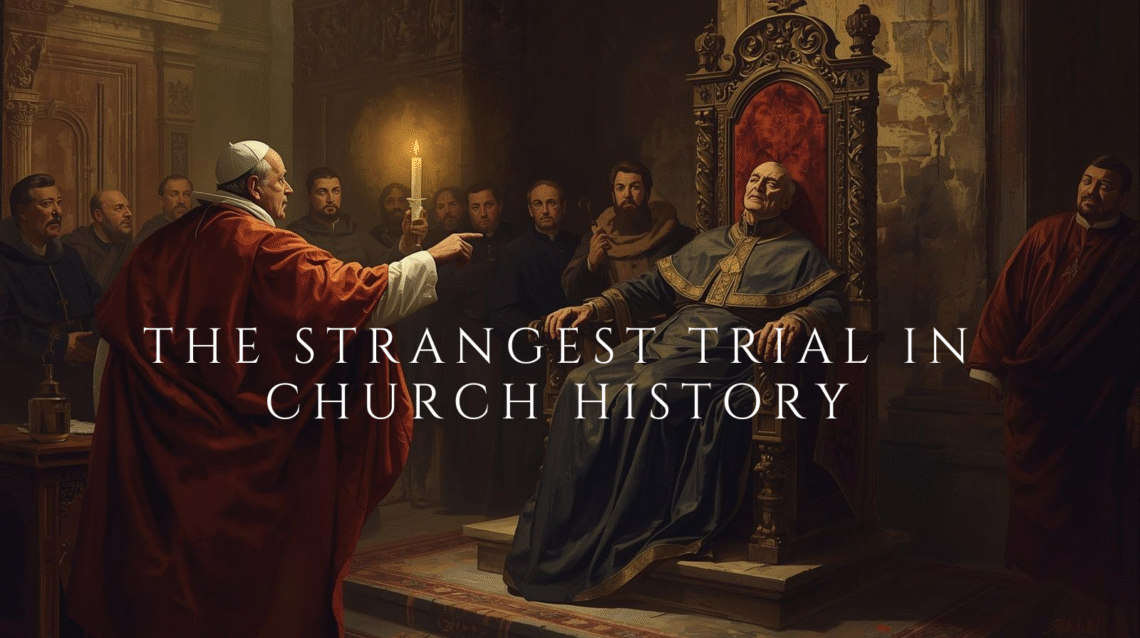
In January 897, the body of Pope Formosus — now decayed, skeletal, and horrifying to behold — was exhumed from its grave.
His corpse was:
- dressed in full papal robes
- placed on a throne
- propped up in the Lateran Basilica
- assigned a deacon to “speak” for him
The bishops gathered.
The candles were lit.
The air was thick with the smell of death.
And the trial began.
Stephen VI screamed accusations at the corpse:
- “You were unworthy!”
- “You violated canon law!”
- “You seized the papacy illegally!”
The deacon, trembling, was forced to answer on behalf of the dead pope.
It was grotesque.
It was surreal.
It was real.
✨ The Verdict — and the Punishment of a Corpse
Unsurprisingly, the dead pope was found guilty.
But Stephen didn’t stop there.
He ordered:
- the papal vestments ripped off the corpse
- the three fingers used for blessing to be cut off
- the body to be stripped of all dignity
- the corpse to be thrown into the Tiber River
The body was tossed like trash into the water.
Rome was horrified.
✨ The Backlash
The people of Rome had tolerated political corruption before —
but this was too much.
The Cadaver Synod sparked riots.
Stephen VI was arrested.
He was strangled in prison shortly after.
Formosus’ body was recovered from the river by monks and reburied with honor.
Later popes condemned the Cadaver Synod as illegal, immoral, and insane.
But the damage was done.
The event became a symbol of:
- political madness
- spiritual corruption
- the dangers of power
- the fragility of the medieval papacy
It remains one of the most shocking episodes in Church history.
✨ Why This Story Still Fascinates
The Cadaver Synod forces us to confront the extremes of human behavior — even within sacred institutions.
It reveals:
- how far revenge can go
- how politics can corrupt the holy
- how fear and pride can twist judgment
- how history can be stranger than fiction
It is a reminder that the Church has endured not because its leaders were always holy, but because God preserved it through storms, scandals, and human weakness.