
When Food Became Discipline, Protection, and Prayer
Food is often treated as comfort, reward, or distraction. But in the life of Saint Benedict of Nursia, food was something far more serious. It was discipline. It was obedience. And at one critical moment, it became the very place where God intervened to save his life.
Saint Benedict’s story reminds us that even the most ordinary acts — eating bread, drinking wine, sitting at a table — can become sacred ground when surrendered to God.
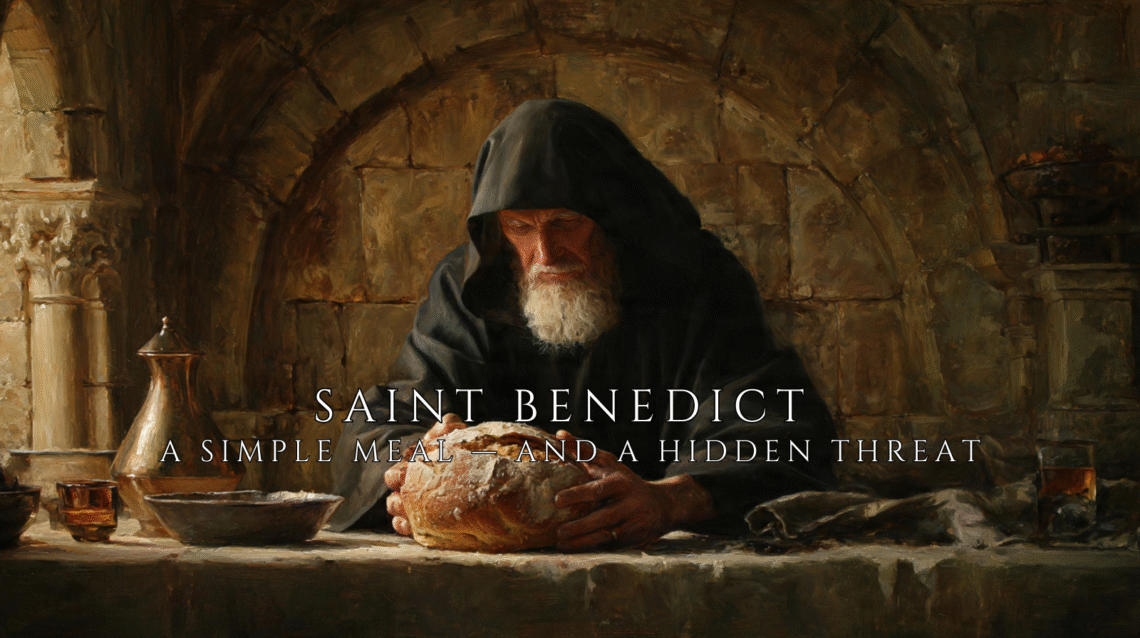
A Simple Meal — and a Hidden Threat
According to early accounts of Benedict’s life, while living among monks who grew resentful of his strict spiritual guidance, an attempt was made to poison him. The plan was simple: poison his food and end his influence quietly.
Before eating, Benedict did what he always did.
He blessed the meal.
The moment he made the sign of the Cross, the poisoned bread shattered. The threat was exposed, not through investigation or suspicion, but through prayer.
This was not magic. It was not spectacle. It was a life so ordered toward God that even daily habits carried spiritual authority.
Why Benedict’s Food Rules Mattered
Saint Benedict did not promote extreme fasting for its own sake. His Rule for monks emphasized balance:
- Bread as a daily staple
- Wine allowed in moderation
- Vegetables and simple foods
- Meals eaten in silence
Food was never indulgence — but neither was it cruelty. Benedict believed that discipline created clarity, and clarity made room for God.
To eat simply was to remain awake.
To eat in silence was to remain attentive.
To bless food was to acknowledge dependence on God.
Food as Spiritual Protection
The attempted poisoning reveals something profound: Benedict’s strength did not come from physical vigilance, but from spiritual order.
He didn’t live in fear.
He didn’t suspect everyone.
He lived rooted.
That rooting — prayer before meals, obedience in small things, consistency in daily life — became protection.
In Benedict’s world, holiness didn’t only show up in miracles.
It showed up at the table.
What This Means for Us Today
You don’t live in a monastery. You’re not eating coarse bread by candlelight. But the heart of Benedict’s wisdom still applies.
- Do you rush through meals without awareness?
- Do you treat food as escape rather than nourishment?
- Do you forget to invite God into the most ordinary moments?
Saint Benedict teaches that protection often begins before the danger appears — in the quiet faithfulness of daily habits.
A Quiet Benedictine Reflection
Before your next meal, pause.
Not long. Not dramatic.
Just long enough to remember:
This food is a gift.
This moment is held.
God is here too.
That is how Benedict lived.
That is how bread became prayer.
And that is how a simple blessing shattered what was meant for harm.