One of the most astonishing martyr stories ever recorded in Christian tradition.
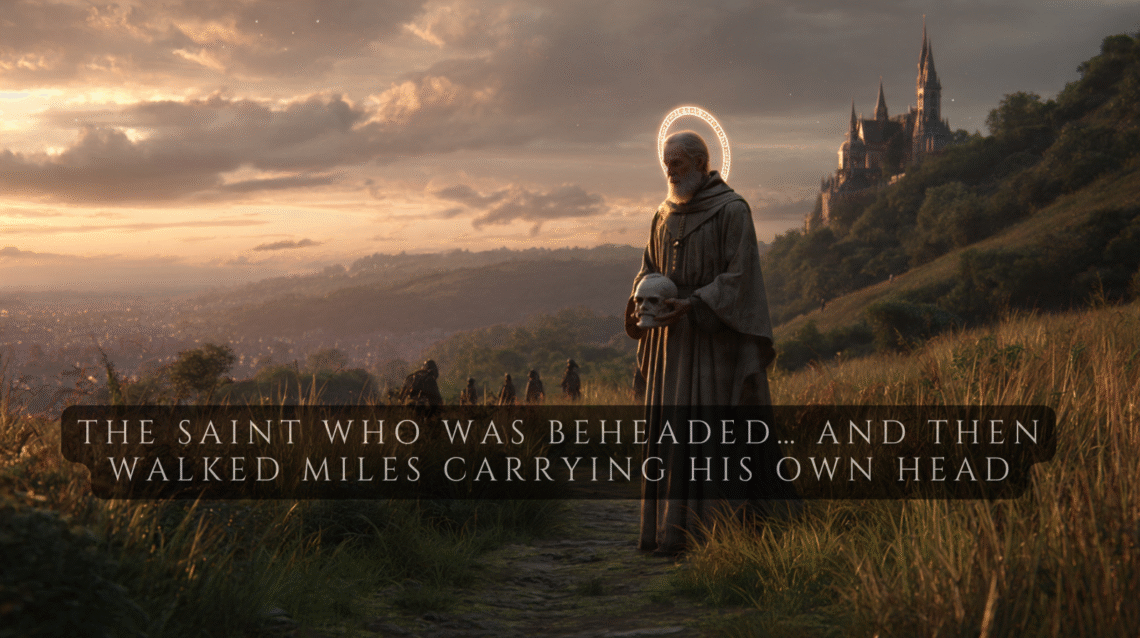
Among the many dramatic martyrdom stories in early Christianity, few are as visually striking or as deeply rooted in tradition as the legend of Saint Denis of Paris. According to ancient accounts, after being arrested for preaching the Gospel, Denis was brutally executed by beheading — but what happened next left witnesses stunned and shaped French devotion for centuries. Instead of collapsing, Denis is said to have stood up, picked up his severed head, and walked several miles while continuing to preach. This extraordinary miracle made him one of the most beloved saints in France and the patron of Paris. This article explores the unbelievable story of Saint Denis, the meaning behind his miraculous “cephalophoric” journey, and why his legend still captivates believers today.
The Missionary Who Challenged Pagan Paris
In the 3rd century, Paris was not yet the city of cathedrals and saints.
It was a Roman settlement filled with temples, idols, and a culture suspicious of Christianity.
Into this world stepped Denis, a missionary bishop sent to evangelize the region.
He preached boldly.
He converted many.
He challenged pagan practices.
And he quickly became a threat to the Roman authorities.
His courage made him beloved by Christians —
and dangerous to everyone else.
Arrested for Preaching the Gospel
Roman officials eventually arrested Denis along with two companions, Rusticus and Eleutherius.
They were tortured.
Beaten.
Ordered to renounce Christ.
They refused.
So the authorities decided to make an example of them.
They were taken to the highest hill in Paris —
a place that would later be known as Montmartre, “the mountain of martyrs.”
There, Denis was sentenced to death by beheading.
The Execution — and the Miracle
The executioner raised his sword.
The blade fell.
Denis’ head rolled to the ground.
But the story didn’t end there.
According to ancient tradition, something astonishing happened:
Denis stood up.
Picked up his own head.
And began to walk.
Witnesses were frozen in shock.
As he walked, Denis did something even more unbelievable:
He preached.
His severed head spoke words of repentance, forgiveness, and faith.
He walked for miles — some accounts say six — until he reached the place where he wished to be buried.
There, he finally collapsed.
The Birth of a Legend
The site where Denis fell became sacred ground.
A shrine was built.
Then a church.
Then, centuries later, the great Basilica of Saint‑Denis, the burial place of French kings.
The miracle of Denis carrying his head became one of the most iconic images in medieval art.
He is often depicted:
- holding his head in his hands
- with angels guiding him
- walking calmly despite the impossible
This type of miracle is called cephalophory — “head‑carrying” — and Denis is the most famous example.
What Does the Miracle Mean?
Whether taken literally or symbolically, the story carries deep spiritual meaning.
It represents:
- the triumph of faith over violence
- the refusal of death to silence the Gospel
- the power of martyrdom
- the dignity of the human soul
- the unstoppable nature of God’s message
Denis’ walk became a symbol of perseverance:
Even when the world tries to silence you, keep walking.
Keep preaching.
Keep shining.
Why Saint Denis Still Matters
Saint Denis is the patron saint of:
- Paris
- France
- headaches (for obvious reasons)
- those facing persecution
- missionaries
His story reminds us that:
- faith is stronger than fear
- death is not the end
- courage leaves a legacy
- God can turn even violence into victory
His legend shaped the spiritual identity of France for over a thousand years.