Saint Rita of Cascia was born in 1381 in Roccaporena, a small village near Cascia in central Italy. From a young age, Rita desired a religious life, drawn to prayer and solitude. However, in accordance with the customs of her time, she was married off by her parents to a man named Paolo Mancini, a local nobleman known for his violent temper and involvement in ongoing feuds.
Rita’s marriage was not a peaceful one. Paolo was reportedly harsh, quick to anger, and prone to cruelty. Their home was shaped by tension and instability rather than safety. Historical accounts describe Rita enduring years of emotional suffering within this marriage, choosing prayer and restraint rather than retaliation. She did not seek revenge, nor did she abandon her faith, even as her circumstances remained unchanged for a long period of time.
During these years, Rita prayed consistently for her husband’s conversion. Her prayers were not for escape, but for transformation. Over time, Paolo’s behavior did begin to soften, and he eventually renounced the cycle of violence that had defined his life. This change, however, did not come quickly, and it did not erase the long years Rita spent waiting in silence.
Tragically, Paolo was later murdered by former enemies. Aware that their sons were at risk of continuing the vendetta, Rita prayed fervently that they would be spared from committing mortal sin. Both sons died shortly thereafter, an event traditionally understood as an answer to her prayer, though one marked by deep sorrow.
After the deaths of her husband and sons, Rita sought to enter the Augustinian convent in Cascia. She was initially refused, largely because of her connection to the violent conflicts that had surrounded her family. According to tradition, she was miraculously admitted after the reconciliation of the feuding families, signaling a turning point in her life.
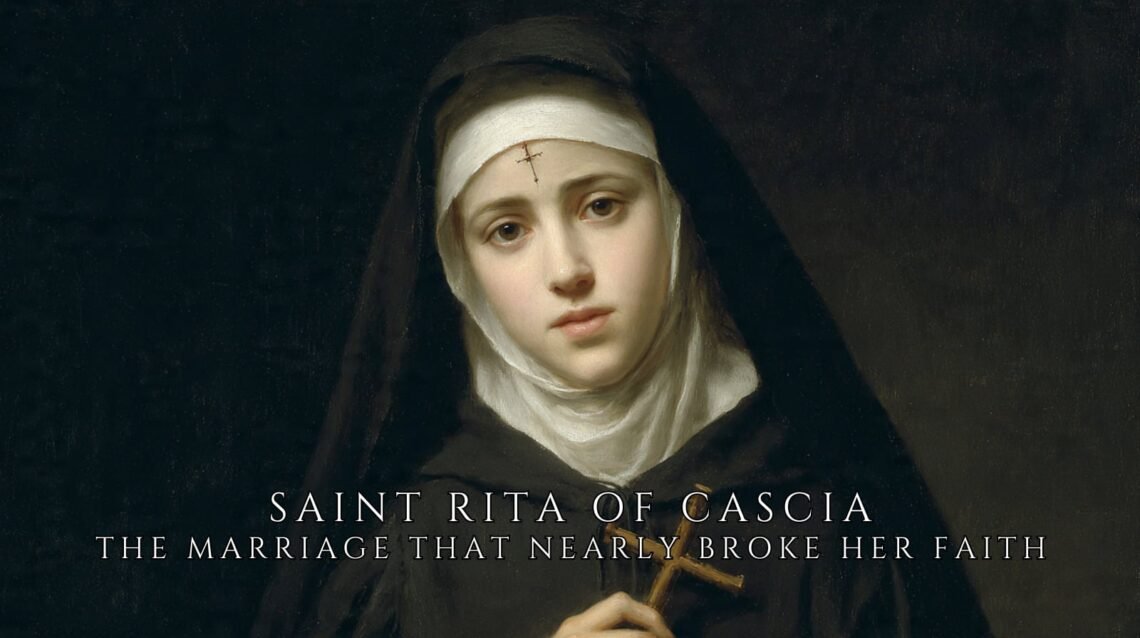
As an Augustinian nun, Rita lived a life of humility, obedience, and penance. Later in life, she received a wound on her forehead, said to have come from a thorn of Christ’s crown during prayer. This mark remained with her until her death and became one of the most recognizable signs associated with her sanctity.
Saint Rita died in 1457, and devotion to her spread quickly, particularly among those facing desperate or prolonged situations. She was canonized in 1900 and is now widely known as the patron saint of impossible causes, difficult marriages, and enduring suffering.
Rita’s life is remembered not because her suffering was brief, but because it was long. Her faith was not marked by dramatic escapes or instant relief, but by perseverance through years of unresolved hardship. Her story continues to resonate with those who find themselves praying without immediate answers, reminding them that faith can remain steadfast even in prolonged silence.