When the Magi arrived to honor the newborn Jesus, they did not come empty-handed. Scripture tells us they brought gold, frankincense, and myrrh—gifts that were deeply symbolic, costly, and intentional.
Frankincense was not chosen at random. It carried meaning then, and it still carries meaning now.
Understanding why frankincense was offered to Jesus, how it was used in the Bible, and how it is used today helps us see how faith, creation, and care of the body have always been connected.
Frankincense in Scripture: What the Bible Tells Us
The Gospel of Matthew records:
“On coming to the house, they saw the Child with His mother Mary, and they bowed down and worshiped Him. Then they opened their treasures and presented Him with gifts of gold, frankincense, and myrrh.”
— Matthew 2:11
Frankincense appears throughout the Old Testament as well. It was used in:
- Temple worship
- Sacred incense offerings
- Consecration rituals
- Prayer ceremonies
In Exodus and Leviticus, frankincense is repeatedly described as holy, pure, and reserved for offerings made to God.
This matters.
Frankincense was never a casual substance. It was set apart.
Why the Magi Gave Frankincense to Jesus
Each gift the Magi brought carried prophetic meaning:
- Gold acknowledged kingship
- Frankincense acknowledged divinity
- Myrrh foreshadowed suffering and death
Frankincense was burned in worship because its smoke rose upward, symbolizing prayers ascending to God. By offering frankincense to Jesus, the Magi were recognizing Him not only as King, but as worthy of worship.
They were honoring His divine nature.
This is why frankincense mattered then — and why it still matters now.
What Is Frankincense?
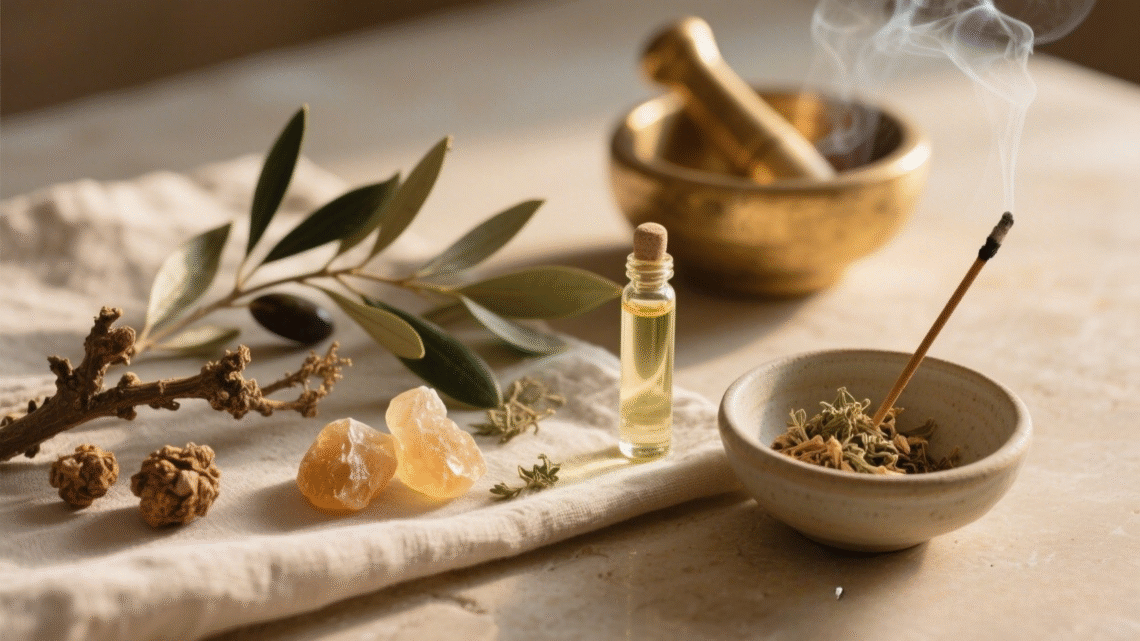
Frankincense is a resin harvested from Boswellia trees, primarily grown in regions of the Middle East and Africa. When the bark is carefully cut, the tree releases a milky sap that hardens into resin “tears.”
These tears were:
- Burned as incense
- Used in sacred rituals
- Valued as highly as gold
- Traded across ancient civilizations
The essential oil used today is distilled from this resin.
How Frankincense Was Used Then
Historically, frankincense was used for:
- Temple worship
- Burial preparations
- Spiritual purification
- Traditional healing practices
- Sacred anointing
It was associated with:
- Holiness
- Prayer
- Reverence
- God’s presence
Its use required intention and restraint.
How Frankincense Is Used Today
Today, frankincense essential oil is used in three primary ways — all of which echo its ancient purpose.
1. Spiritual & Emotional Use
Frankincense is known for its grounding, calming aroma.
It is commonly used:
- During prayer or meditation
- To quiet anxious thoughts
- To promote stillness and focus
- In worship spaces
Its scent encourages reflection rather than stimulation. This is why it remains closely tied to spiritual practice.
2. Skincare & Beauty Use (With Wisdom)
Frankincense essential oil is widely used in modern skincare — particularly for mature or stressed skin.
Commonly cited benefits include:
- Supporting skin renewal
- Improving the appearance of fine lines
- Calming redness and irritation
- Promoting an even skin tone
Important note:
Frankincense essential oil must always be diluted in a carrier oil (such as jojoba or sweet almond oil). A typical dilution is 1–2 drops per teaspoon of carrier oil.
This reflects the biblical principle of moderation and stewardship.
3. Physical Wellness (Traditional & Aromatic Use)
Traditionally, frankincense has been used to support:
- Joint and muscle comfort
- Respiratory ease (through aroma)
- Overall balance and calm
Modern research continues to explore its properties, but frankincense should not be treated as a cure-all. Its value lies in support, not replacement of medical care.
What Does Frankincense Smell Like?
Frankincense has a scent that is:
- Warm
- Resinous
- Slightly citrus-like
- Earthy and grounding
It is neither sweet nor overpowering. This subtlety is part of why it has been used in sacred spaces for thousands of years.
Is There Medical or Scientific Support?
While frankincense has a long history of traditional use, modern studies suggest it may have:
- Anti-inflammatory properties
- Antioxidant activity
- Skin-supportive effects
However, responsible use matters. Frankincense is best understood as supportive, not medicinal in the clinical sense.
Scripture consistently teaches wisdom, discernment, and balance — not excess.
Why Frankincense Still Matters
Frankincense reminds us that:
- God placed wisdom within creation
- What was used in worship also served the body
- Caring for the body can be an act of reverence
What was once burned in the Temple is now used gently, intentionally, and with restraint — a reminder that faith and daily life are not separate.
A Closing Reflection
The Magi did not bring frankincense because it was fashionable.
They brought it because it was holy.
Today, when frankincense is used with understanding and respect, it serves as a quiet reminder of prayer, presence, and purpose — just as it did at the beginning.